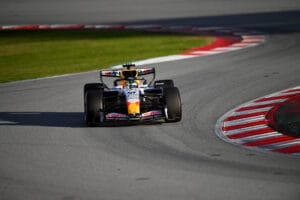

From a party team to a championship team: that’s the story of Red Bull Racing in Formula 1. When it entered the sport in 2005 for a bargain price – Red Bull Racing founder Dietrich Mateschitz bought the Jaguar team for the symbolic amount of 1 pound – it seemed to the outside world that the energy drink manufacturer was primarily interested in storytelling.
Cool, tough, beautiful stories, as Red Bull seemed to use Formula 1 primarily as a marketing platform. It offered fans, followers, and VIPs unprecedented access behind the scenes, into the paddock, while throwing the best and wildest parties and performing unprecedented stunts and demos with its Formula 1 cars.
From Fun to Podiums
Red Bull Racing is the rebel, the new kid on the block, but behind all the outward show, the ambition burns – and that ambition may be underestimated by other teams amidst all the partying. Mateschitz, although he has never been a top athlete, is a born winner who wants to be the best in everything he does. He shares this vision with Helmut Marko, who runs the racing stable as his right-hand man, together with team boss Christian Horner. The fact that sporting ambitions can still go hand in hand with having fun is underscored by Red Bull when driver David Coulthard secures the first podium finish in Monaco in 2006 – and he stands on the rostrum in a cape to promote the new Superman movie. Team boss Horner also makes a splash by jumping into the pool of Red Bull’s floating and party-rocking Energy Station dressed only in a Superman cape.
Quartet of Championships
Coulthard’s most significant achievement during Red Bull’s early years is his successful recruitment of Adrian Newey from his former employer, McLaren. The British design genius creates his first superior Red Bull for the 2009 season, with Sebastian Vettel and veteran Mark Webber at the wheel, laying the foundation for the upcoming successful period. The concept of the 2009’s RB5 is largely the basis for the RB6 to RB9, with which Vettel wins four consecutive world titles between 2010 and 2013. Red Bull Racing also celebrates with a quartet of constructors’ titles. It’s not always easy, with Vettel having to contend with teammate Webber – including a charged collision in Turkey – as well as Fernando Alonso and Lewis Hamilton, but there are several dominant years for Vettel and Red Bull Racing.
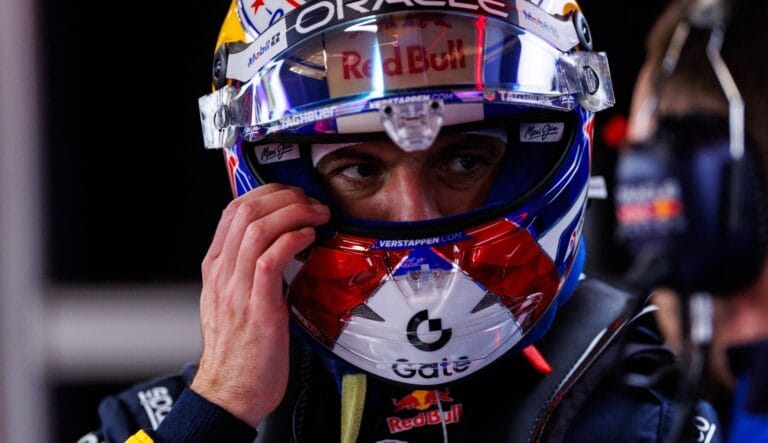
The beginning of Formula 1’s hybrid era marks the temporary end of Red Bull’s dominance. The Renault engine in the cars falls short and often proves unreliable. When Vettel leaves for Ferrari at the end of 2014, it’s a significant loss for Red Bull, but talent scout Marko has already spotted a new star: a certain Max Verstappen, who is racing in Formula 3. After his debut year with Toro Rosso in 2015, Marko believes he is ready for the big leagues early in 2016. In his first race for Red Bull in Spain, the Dutchman secures his first victory. Although Daniel Ricciardo, a cheerful, popular, and fast driver, is in the other Red Bull, Verstappen’s immense talent makes him the team’s leading driver in the following years.
The Golden Move
While Verstappen proves himself a revelation, Red Bull Racing remains second best in the Mercedes era, much to the chagrin of Marko and Mateschitz. The team has to settle for occasional victories. A serious run for the title is not in the cards. Multiple threats to quit if the rules do not change have no effect. The one who does walk away, as team boss Horner sees it, is Ricciardo. After a collision in Baku in 2018 reminiscent of the one between Vettel and Webber in Turkey 2010, Ricciardo knows what time it is. Verstappen is the man for Red Bull and the Aussie moves to Renault, just as Red Bull swaps the French manufacturer’s engines for Honda’s in 2019 – a move that turns out to be golden in retrospect.
Champion Verstappen
It’s a two-year wait, but in 2021, Red Bull Racing definitively returns to the forefront. The RB16B, still designed by Newey, proves to be a hit, and the Honda engine proves to be a reliable and fast power source. A sensational titanic battle between Lewis Hamilton and Max Verstappen ensues. With a decisive overtaking move in the last lap of 2021’s controversial season finale, Verstappen crowns himself the new champion and king.
In 2022, Red Bull Racing is in a class of its own. Although Mateschitz passes away in the fall of 2022, he still witnesses Max Verstappen dominantly securing his second title. In total, Verstappen achieves fifteen victories in 2022, a record in Formula 1. But the hunger for success is not yet satisfied. In 2023, the winning streak continues relentlessly, with the team winning all races in the first half of the season. No one seems to be able to compete with the Dutchman behind the wheel of the RB19, not even teammate Sergio Pérez.
Red Bull Racing
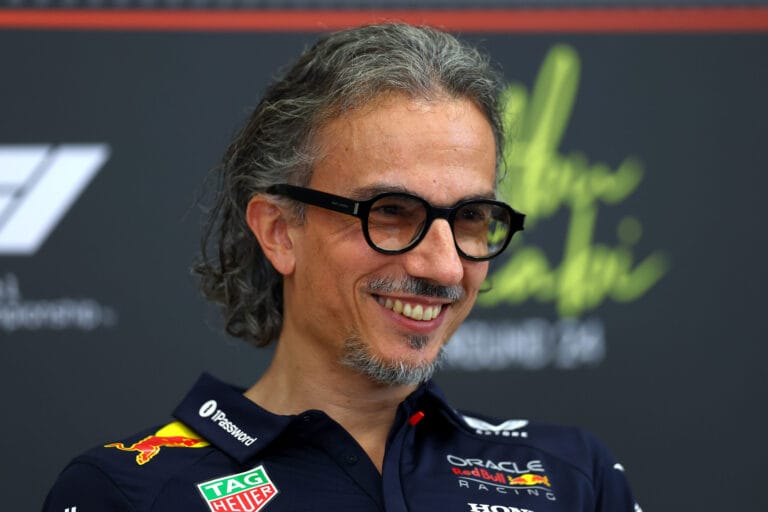
| Team Principal | Laurent Mékies |
| Technical Director | Pierre Waché |
| Test Drivers 2025 | TBA |
| Headquarters | Milton Keynes |
| GP Debut | 2005 |
| Driver Titles | 8 (2010, 2011, 2012, 2013, 2021, 2022, 2023, 2024) |
| Constructor Titles | 6 (2010, 2011, 2012, 2013, 2022, 2023) |
| Final Standings 2024 World Championship | 3 |
| 2025 Drivers | |
| Max Verstappen #1 | |
| Nationality | Dutch |
| Date of Birth | September 30, 1997 |
| GP Debut | Australia 2015 |
| World Titles | 4 (2021, 2022, 2023, 2024) |
| Final Standings 2024 World Championship | 1 (437 pts) |
| Yuki Tsunoda #22 | |
| Nationality | Japanese |
| Date of Birth | May 11, 2002 |
| GP Debut | Bahrain 2021 |
| World Titles | 0 |
| Final Standings 2024 World Championship (RB) | 12 (30 pts) |