
Formula 1 is filled with technical intricacies that even seasoned fans need clarification on. That’s why we gave you the opportunity in FORMULA 1 Magazine to ask your burning questions to our experts Ernest Knoors and Rob van den Heijkant. They delved into the subject matter and provide clear, understandable answers. Today, we’re discussing everything about the pit limiter.
The question comes from Ron Huber: “I would like to know how the pit limiter works. The car approaches and the driver presses a button. But does the car then immediately drive at the set speed or does the driver have to visually drive the speed on his steering wheel and then, like a sort of cruise control, set the permitted speed via a button?”
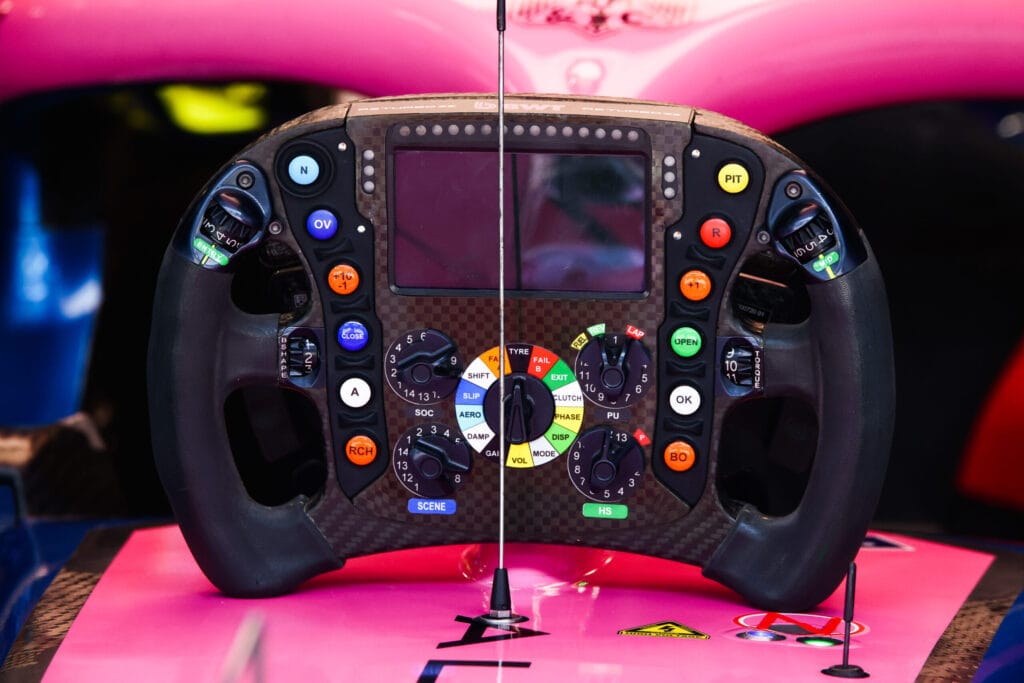
This is the answer from Ernest Knoors: “It’s actually a speed limiter and not a cruise control. You approach the pit lane, you brake and you have to accelerate from a lower speed into the pit limiter. Suppose the maximum speed in the pit lane is 80 km/h, then you have to brake to below that speed, then you press the button and you go full throttle. The car will then not go faster than 80 km/h. The pit limiter itself works by shutting off cylinders, which is why the cars sound different in the pit lane. Good to know: the electronics look at the speed of the tire to determine the speed of the car. It is therefore important that the drivers select the correct tire on their steering wheel. A rain tire, for example, has a larger diameter than a slick.”
Park Assist
“In addition, as a driver, you need to have the skill to lose as little time as possible, so ideally you brake to 79.9 km/h before you engage the pit limiter. Some drivers are very visually oriented and want to see on the shift lights how close they are to the pit limiter, while other drivers prefer to hear beeps. Compare this to the beep you hear when parking a passenger car equipped with park assist.”