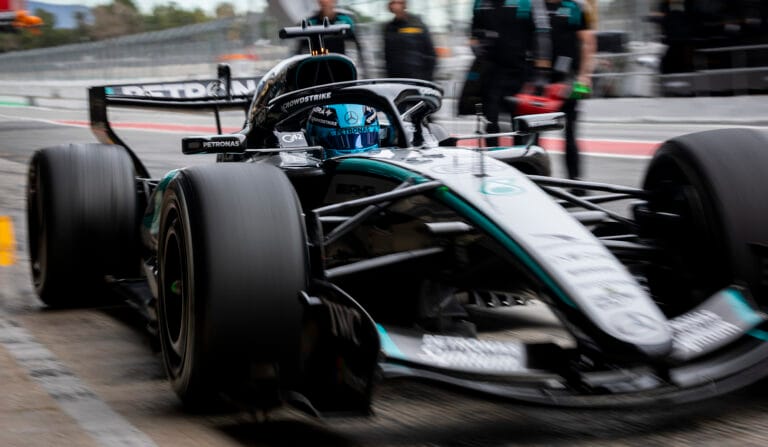

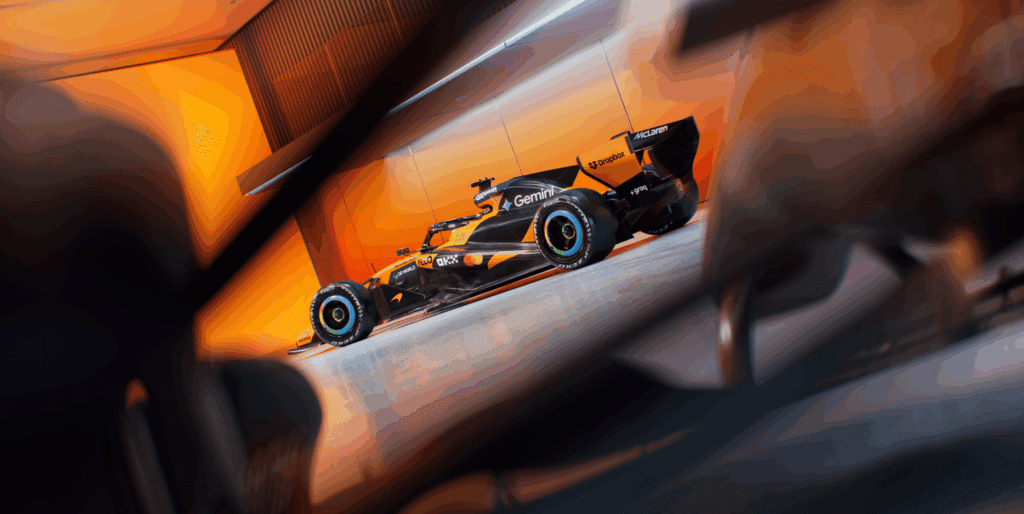
The upcoming F1 season is dominated by sweeping rule changes. The cars are smaller and lighter and employ a raft of aerodynamic innovations. For the engineers that has introduced significant complications, McLaren chief Rob Marshall revealed during the presentation of the MCL40. Using the main changes as his guide, he explained where the biggest challenges lay.
What is immediately striking in 2026 is that the cars have become noticeably more compact. To the pleasure of several drivers, the chassis are narrower and shorter. After the first shakedown in Barcelona there were already positive noises from the paddock, particularly about the reduced footprint. For the engineers, however, this more compact package brought fresh challenges, for example when it came to packaging all the systems.
“The car is so much shorter,” explained Rob Marshall, chief designer of McLaren, during the season launch in Bahrain. “That makes it very difficult to find space for radiators and electrical modules, which used to be spread around the car. There is simply less room for everything. What has helped us is that the fuel tank is a little smaller.”
Complex safety systems
Designers also had to take a new direction on safety, with tougher crash tests and a completely revised nose structure. Marshall explained: “The crash structure is essentially entirely new, because the regulations have changed this year. We must ensure that after a minor shunt — one that rips off the front wing or the front half of the nose — the remaining structure still protects the driver in a second impact. That makes the nose-design considerably more complex. There are new regulations at the rear as well, and stricter homologation requirements,” he continued. “A great deal of effort and research has gone into making the car capable of withstanding those tougher tests.”
The new regulations also leave room for differentiation and bespoke design solutions, Marshall assured. Several approaches to the wing mechanisms were already on show in Barcelona; the front wing will feature active aerodynamics in 2026, but teams are free to experiment. “The new wing still has the shape of a spear point, but it now sits lower and has a much wider footplate,” Marshall explained. “Additionally, it is now actuated in the manner of the old DRS system. There’s considerable freedom in how you implement that. I expect we’ll see different solutions across the grid.”