
With the opening rounds behind it, faster cars than ever and the most packed calendar in its history, Season 12 of Formula E is already a season to salivate over. Still, 2026 feels like an intriguing transitional year for the now-mature championship.
When Formula E first saw the light in 2014 it was, above all, a concept. Electric racing in city centres, close to the public and built around sustainability. It was bold but often messy in execution, with contrived mechanisms to manufacture spectacle. Relevant, though? From the start — yes: it follows and even helps drive society’s electrification.
Twelve years on, Formula E is now a fixture on the international racing calendar. It was never a rival to Formula 1 and never will be — there is, after all, only one pinnacle of motorsport. But going head-to-head was never the point. It doesn’t need to be ‘in place of’; both categories can coexist. Sportingly and commercially there’s room for both, each with its own market, target audience and fanbase.
Critical
Formula E has exploded in the last decade. The bizarre car swaps and energy panics are gone; in their place sits high-grade engineering, layered strategy and surgical precision. Driver standards have risen too. If you’re racing in Formula E today, there’s nowhere to hide. The pack is tight and mistakes are punished without mercy.
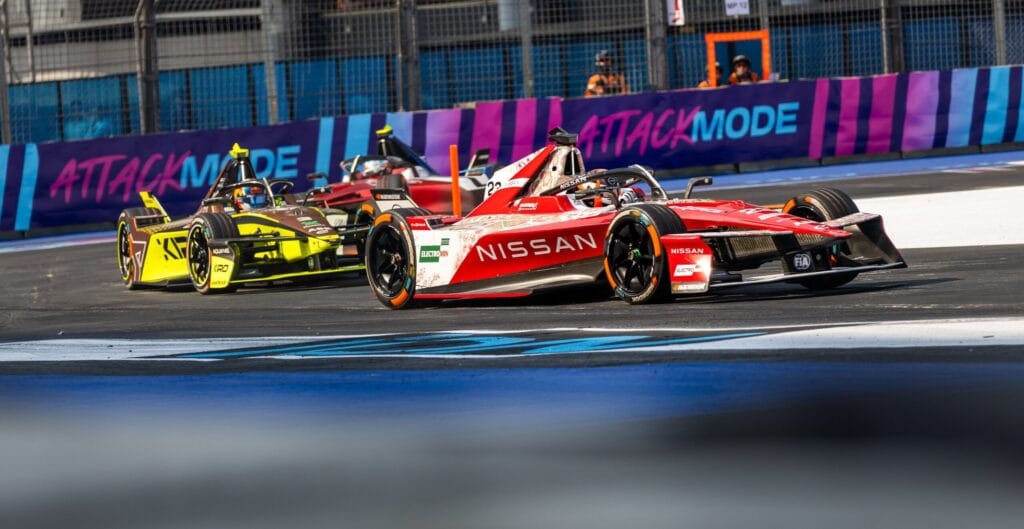
Sounds good, but is the championship without fault? Far from it. The noise will never win over everyone, and after twelve seasons that’s not going to change — you either like it or you don’t. The same goes for the various artifices used to spice up the racing, like the Fanboost introduced years ago, Attack Mode and the rest.
The circuits remain a target for criticism. And rightly so. At times they look downright soulless and some tracks are genuinely (too?) narrow. More often than not the races are too complex to follow intuitively. The sport demands a lot of explanation, a lot of context. In an era of rapid consumption that is a liability. Formula E asks for patience. Attention. Understanding. That may draw a certain slice of motorsport fans — but it alienates many others.
GEN4
The car may make up for some of that. To be fair: it launches like a rocket off the line and is still faster over the first metres than a Formula 1 car. In 2025–2026 they will race with the GEN3 Evo, an evolution of the GEN3 car used since 2023. For the aficionados: this season delivers up to 350 kW in race mode, four-wheel drive in qualifying and Attack Mode, more than 600 kW of regeneration capacity and fully implemented brake-by-wire with no hydraulic rear brakes.
Put bluntly: the car is lighter, sharper and quicker than ever. That produces intense on-track battles, but it’s only a transition year. Because off the track the priority is the development of the GEN4 car for the seasons ahead. Teams and drivers race flat out, but they develop with care.