
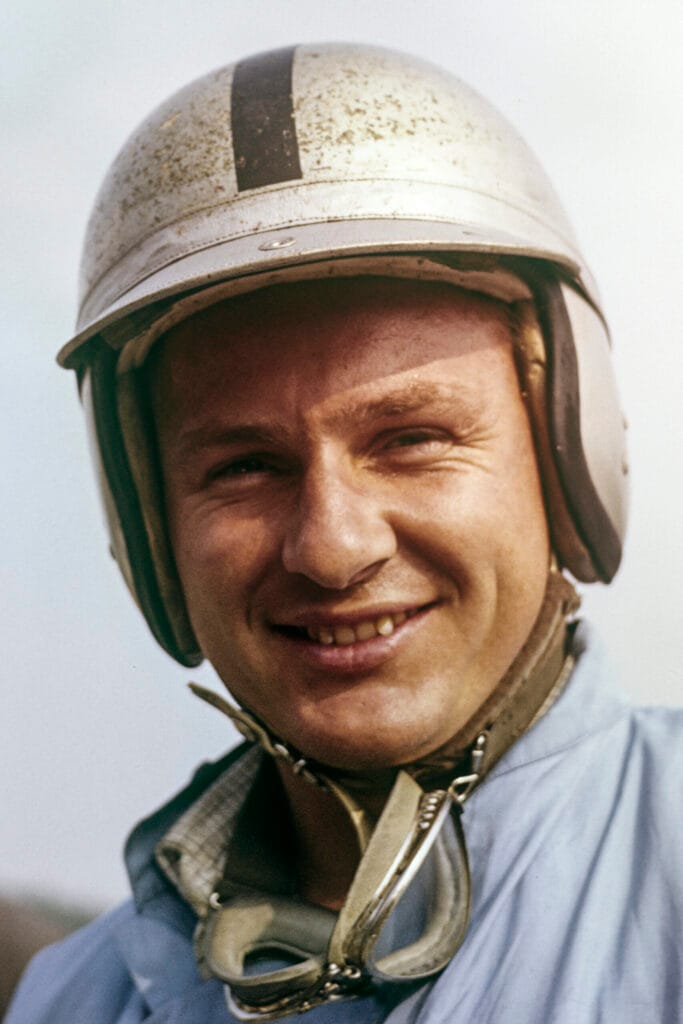
Sixty years ago McLaren made its debut as an F1 team. It has known highs and lows, shifts of power, good fortune and sorrow.
There is no present without a past. To put McLaren’s current success — and that of a few decades ago — into context, it’s necessary to look back. One name stands out: Bruce McLaren. Today it may be an ‘English’ team, but through its founder the roots lie in New Zealand.
Back to 1937. Bruce McLaren is born. According to the accounts, he grew up with fragile health and an insatiable curiosity. A congenital hip defect kept him bedridden for long stretches. For a while there was little else for him but books, drawing and daydreams. But precisely because of that, as would become clear later, the young Bruce developed a drive to understand how things worked. His interest in engineering grew fast.
That he would go on to design cars is one thing. That he would also become a racing driver is another. Bruce McLaren proved skilled at both; many from that era described him as an engineer who could also drive quickly. That led to a racing career in Europe. At Cooper, in 1959, aged 22, he became the youngest Grand Prix winner at that time.
It was a record that would stand for decades. But more important than that first victory was what people were already saying about him in the paddock: that he listened, that he asked questions, and that he was still wrenching on cars in the evenings while others were already at dinner. Bruce McLaren didn’t just drive cars — he was obsessed with them.
His own team
No wonder, then, that in 1963 he decided to set up his own racing team. Not out of idealism, as he would say many years later. But because he, with his technical expertise, thought it could be done far better than he had experienced as a driver. Lighter. Smarter. More considered. His brand-new team is initially small and short on resources, but the vision is large and clear: that engineering and people can strengthen each other.
McLaren then makes a strong impression in the Canadian–American sports car championship, better known as Can-Am. The McLaren car proves blisteringly fast, almost intimidatingly dominant. An orange-clad monster — there’s today’s ‘papaya’ link. Rivals praise McLaren for its precision and boldness. But, according to those involved, the big man behind the success, Bruce McLaren himself, remains unchanged. He’s calm, approachable, curious. He likes to win, that much is true.
At the same time there’s the first Grand Prix in Formula 1 in 1966 — sixty years ago. McLaren himself cannot enjoy the top class for long: on 2 June 1970 the New Zealander is killed in an accident at the Goodwood circuit. Bruce McLaren was only 32 years old. He could never have guessed how vast the legacy of the team he left behind would be.