
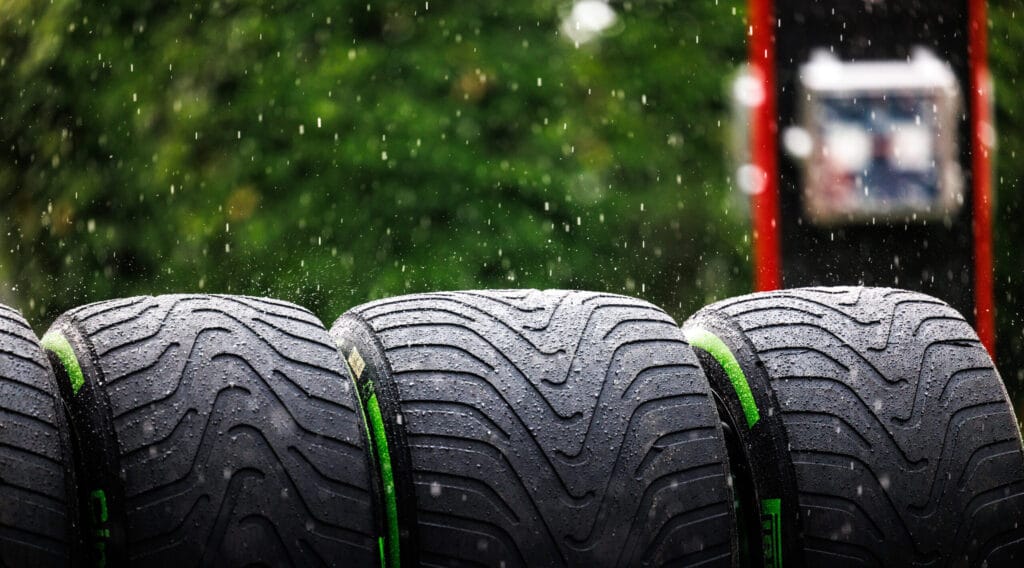
With the introduction of the new F1 regulations in 2026, Pirelli will also bring new tyres under the cars. The model range remains unchanged for now, although the Italian maker is exploring a third wet tyre to bridge the gap between the intermediates and the full wets. Racing in the wet remains a tricky issue in Formula 1, particularly from a safety standpoint.
Visibility in rain races has been a recurring flashpoint over the past few years. The sport tried bespoke splash guards to cut spray, but without decisive success. Even the full-wet tyres, which are rarely used in practice, can’t stop F1 cars throwing up huge amounts of spray. During the opening test week in Bahrain, Pirelli chief Mario Isola spoke to the press. He outlined the tyre supplier’s test programme and underlined the focus on making wet racing safer.
“Visibility will probably be a bit better because the cars use a new diffuser that throws up less water,” he said. “On top of that the tyres are slightly narrower, so they displace less water. But I wouldn’t dare say whether that’s enough for the race director to give the green light to drivers in heavy rain.” Wet testing remains limited for Pirelli, however. “Every scrap of data matters, because we have very little wet running,” Isola added.
Wet track in Bahrain?
Pirelli currently has three test sessions on the schedule. “You need a very specific circuit,” he explained. “That’s why we’re going to Paul Ricard and Magny‑Cours.” The tyre supplier is also planning a dedicated wet test in Bahrain. Although the circuit sits in the desert, an advanced irrigation system can artificially wet the asphalt. “The circuit has a fantastic spray system to make the track wet,” Isola said. “If it works well, we can test in heavy, wet conditions.” These tests take place on 28 February and 1 March, ahead of the season‑opener in Melbourne. Only McLaren and Mercedes will take part.
Finally, Isola revealed that Pirelli may experiment with a third wet tyre: the so‑called ‘single-tread super intermediate’. This tyre is intended to bridge the gap between the green intermediates and the blue full wets. “We must seize every opportunity to develop our product in wet conditions,” he concluded. Although he hopes it will “just” stay dry this year during the first race weekend in Australia, he stressed the importance of data from a rain race. “It would be valuable to collect information from a wet race so we can steer our development in the right direction.”
View the F1 calendar for 2026 here