
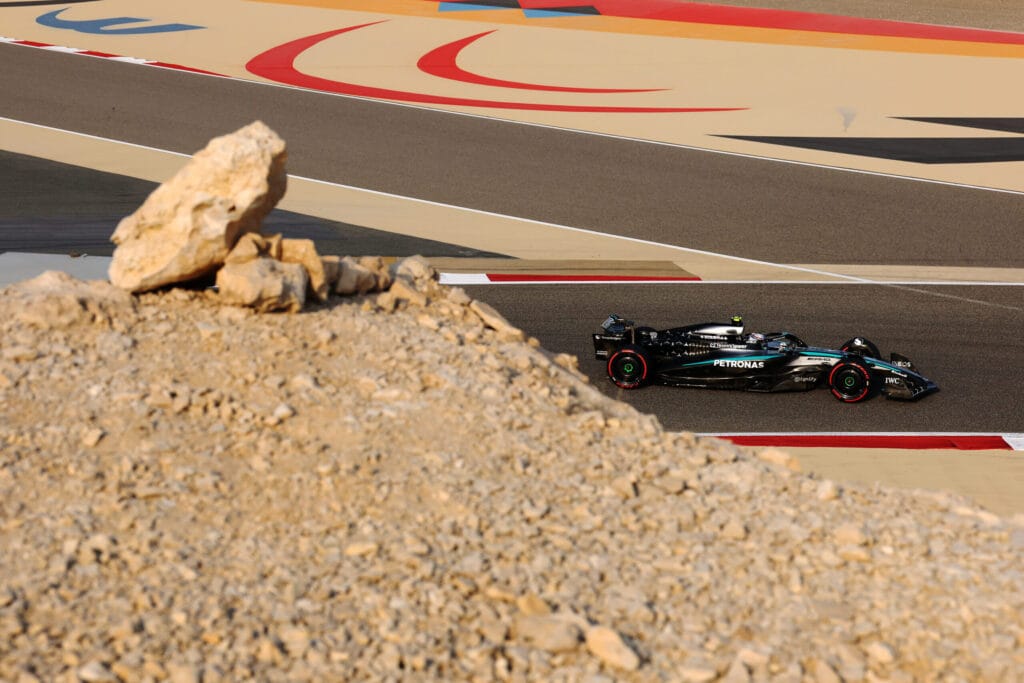
The desert serves as the dramatic backdrop for the Formula 1 showdown, and every year, the Middle East hopes for a spectacle fueled by oil dollars.
Ten years ago, Formula 1 seemed like a toothless tiger. Ratings plummeted, fans drifted away, and races became endless reruns of the same Mercedes dominance. The glitz faded, and excitement vanished—until Max Verstappen burst onto the scene. Yes, since his debut in 2015, he has been shaking up the sport.
But while the action unfolds on-screen, behind the scenes, a different story is brewing in Formula 1, driven by oil dollars—the lifeblood that will keep the sport afloat in the future.
Let’s rewind to 2017: Liberty Media took control of Formula 1 from Bernie Ecclestone at the start of the year. For over €7 billion ($8 billion at the time), the Americans didn’t just buy a sport; they acquired the commercial rights to a sleeping giant, brimming with untapped potential. Liberty’s mission? To modernize, rejuvenate, and re-establish the sport within a globally proven culture of speed and spectacle—a combination designed to ignite showmanship and success.
Fast forward eight years, and that mission has been a resounding success. By 2024, F1 boasted around 750 million fans worldwide, with average circuit attendance rising by 34% since 2017. The sport’s revenue hit €3.5 billion, and sponsorship deals are flying off the shelves.
The Dark Side
However, this success comes at a cost, increasingly paid with oil dollars. The capital Liberty Media has tapped into doesn’t just flow from luxury brands or streaming platforms; it also gushes from the desert. Is this a problem? Opinions are divided. Many benefit from the invested oil dollars—from teams and drivers to fans, sponsors, and media. But criticism is inevitable, particularly regarding human rights and sustainability.
Liberty claims to be modernizing the sport while keeping an eye on ethical boundaries. There’s now greater focus on the well-being of those working in Formula 1, along with cost-saving measures through budget caps. Since 2021, teams are limited to spending no more than $135 million annually on car projects. This has forced Ferrari, Red Bull, and Mercedes to exercise discipline and provided breathing room for smaller teams. The competitive gap has narrowed, the competition has become healthier, and the value of each team has soared.
The Thin Line Between Values and Financial Success in Formula 1
There’s a razor-thin line between ethics, values, and financial success in the world of Formula 1. Just look at the stark contrast between campaigns like ‘We Race As One’—which champions sustainability, equality, and inclusion—and the harsh reality of racing in countries where human rights are trampled. Picture this: sweltering paddocks filled with energy-guzzling air conditioning units in nations where oil dollars flow freely, dollars that have become essential for the sport’s current existence.
Bahrain: The Trailblazer
Since Bahrain hosted the first Formula 1 race in a Gulf state back in 2004, the game has changed dramatically. The circuit, designed by the legendary Hermann Tilke at the behest of the government, became the stage for the season opener for many years—a unique feature worth tens of millions in oil dollars.
Then came Abu Dhabi in 2009, eager to make its mark on the Formula 1 map. The city in the United Arab Emirates didn’t just want to host ‘any race.’ The emirs shelled out millions for something spectacular: an exclusive night race with a massive global audience and the guarantee of being the season’s final showdown.
Fast forward to 2021, and Qatar joined the ranks. Was it a one-off? Absolutely not! In 2023, a new pit complex worth a staggering 300 million euros was unveiled, along with a ten-year contract totaling nearly half a billion euros, all backed by Qatar Airways. This airline also became the title sponsor for other Grands Prix, which explains why you might spot Qatar Airways as a prominent sponsor on the straight in Austria over the years.
Bahrain has thrived as a small state in auto and motorsport for over a decade and a half, while Qatar has added Formula 1 to its portfolio after hosting MotoGP and the World Cup. This success made Saudi Arabia realize years ago that investing oil dollars in sports could pay off handsomely. It’s called ‘sportswashing’—using earned money to reinvest in sports to generate even more wealth. And the plans in Saudi Arabia are nothing short of monumental.
Pretpark: Saudi Arabia’s Grand Racing Ambitions
In a flash, Jeddah has transformed into a semi-street circuit, hosting a spectacular night race since 2021! Sponsored by Aramco, which has been a global Formula 1 sponsor for years. But wait, there’s more! Aramco is now shelling out tens of millions of dollars to Aston Martin to be the title sponsor of that F1 team!
And that’s not all! Saudi Arabia, following in Qatar’s footsteps by securing the 2023 World Cup, is planning to build a second circuit. This one promises to be unlike anything seen before! The location? Qiddiya City, just outside the capital, Riyadh. This circuit will feature a jaw-dropping turn that climbs 70 meters high, with a total elevation change of 108 meters. It’s set to be a real-life amusement park!
What’s the price tag for this ambitious project? Brace yourself—reports suggest it will cost around 500 million euros!
When you compare this to how the Dutch GP was organized in Zandvoort without government support, it’s mind-blowing! We’re talking about a world of extremes and contrasts. It’s no wonder European circuits struggle to compete with the vast wealth pouring in from the desert. The big question remains: how much more will Liberty Media and Formula 1 be willing to bow to oil dollars?
Money Drowns Out Everything
Money, infrastructure, and political clout have always been key in sports. Oil-rich states are using Formula 1, MotoGP, Formula E, Dakar Rally, football, golf, and more as a showcase for modernity. It’s also a distraction from ongoing human rights violations that critics continue to highlight. As an old paddock veteran once summed it up: “The engines are still loud, but the sound of money drowns out everything.”