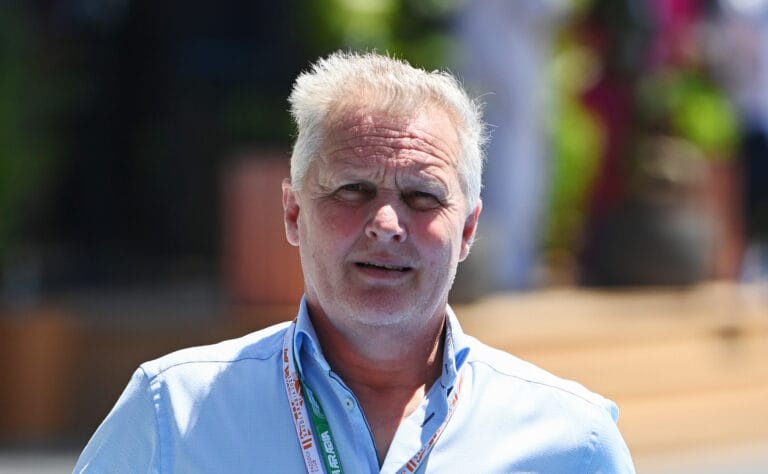


Former pro footballer Danny Hoekman recently released the book 11 Unique Lefties of Orange. As a coach, he worked in Qatar and Abu Dhabi, the last two F1 stops of the recent season. “The adoration, the fan behavior isn’t really there in those countries.”
What is life like in Qatar and Abu Dhabi?
“The first word that comes to mind is boring. I found it a uniquely beautiful and enjoyable experience to work in a different (football) culture. But the life itself was very dull. Due to the temperatures and the intensity of your work hours, at most two and a half, you have nothing else to do. After that, it’s just hanging around at the resorts or in the massive shopping malls. But I had seen all of those inside and out after a month. Then you’re really counting down the hours. Honestly, that was the hardest part for me. There are no seasons; every day is the same in terms of weather and temperature. Days feel very long.”
For a Western ‘guest worker’ like you back then, isn’t life there pleasant?
“As a football coach, you’re on the good side of the coin. Generally, you live well, have all the facilities, and benefit from the guest workers from Pakistan, India, and Nepal, the servants who work for a pittance and live in terrible conditions. You have to get used to that at first. It’s very strange when people act so submissively. I found that difficult, even embarrassing. Until I was told that I had to take advantage of it. Otherwise, those people wouldn’t have jobs.”
Are you surprised that there are so many desert races nowadays with the additions of Qatar and Saudi Arabia?
“No. Because the aim of those countries is to put themselves on the map through sports. This has increased the flow of tourists, the real estate market has grown enormously, the economy has changed, and the West views these countries differently than when I went there in 2001. The global perspective has, in that regard, perhaps even shifted a bit less for Saudi Arabia. The people in all these countries are, by the way, extremely civilized and friendly towards Westerners.”
Are Saudis, Qataris, and Emiratis Big Sports Fans, or Is It All About Prestige?
“Let’s talk football: it’s a popular sport. But the real sports experience is just missing. Stadiums are filled with Indians: one in a red shirt waving a flag, another in green. They create an atmosphere as if it’s there. Generally, people follow sports, but the adoration, the fan behavior isn’t really there. The experience is very different.”
Is Sport, Including Formula 1, in Desert Countries Only for the Rich Locals?
“Yes, that definitely applies to Formula 1. Everything organized in these countries, the facilities and pleasures, is for the local population. Almost all expertise is hired from abroad. If you’re high in the hierarchy, you get treated differently. But as a Westerner, you’re just part of the workforce. They hire expertise and use it, but only for their own benefit.”
Do You Think More Desert Races Will Come in the Future?
“I don’t expect Dubai to be on the calendar anytime soon, though I won’t rule it out. Abu Dhabi is definitely staying. Maybe Oman in the future? Not just football clubs are sensitive to oil dollars; Formula 1 is too. The influence of desert countries in sports is only growing. Why? Simple: the money, the vast oil dollars make everything fluid. I’m one of the few Westerners who turned down a job in Qatar because I had to surrender my passport and couldn’t freely enter and exit the country. I won’t trade my freedom for that; it feels like living with an ankle monitor.”